Abhayagiri Vihara
 Religious Places


About Abhayagiri Vihara
Explore Abhayagiri Vihara, a vast monastic centre where monumental ruins reveal Anuradhapura's international Buddhist history.
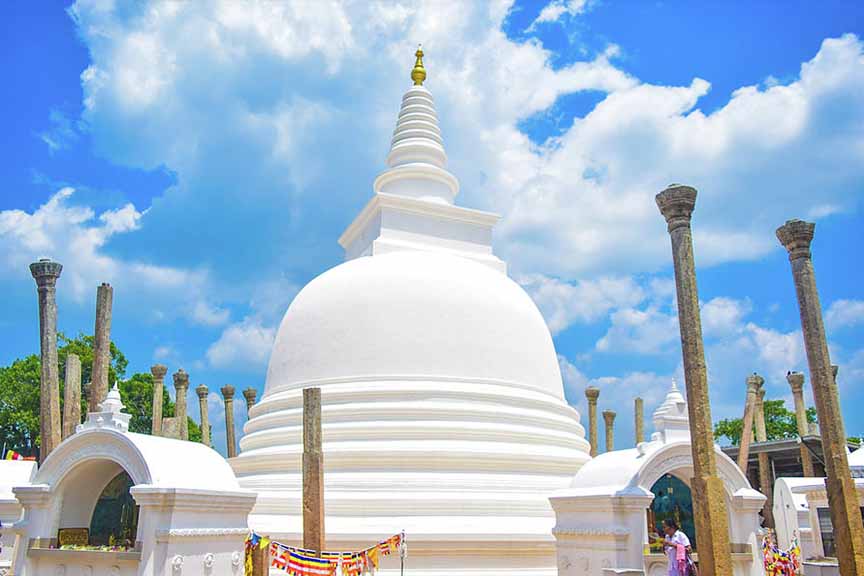
Abhayagiri Vihara was one of ancient Anuradhapura's greatest monastic complexes, founded by King Vattagamani Abhaya in the first century BCE. It developed into a major centre of Buddhist learning and welcomed doctrinal traditions and scholars from across Asia. The name is also associated with the immense Abhayagiri Dagoba, which dominates the northern sacred city.
The complex extends across forested grounds with the stupa, image houses, monasteries, refectories, bathing ponds, guardstones and carved moonstones. Its ruins reveal the scale of monastic life, from grand ceremonial buildings to practical systems for water, food and accommodation. The nearby Abhayagiri Museum helps explain the objects and architecture found across the site.
Visitors can spend several hours walking or cycling between the monuments. The shaded setting is often quieter than Anuradhapura's busiest shrines, but Abhayagiri remains a sacred place. Dress modestly, move respectfully around worshippers and allow time to understand the complex as a living chapter of Buddhist history rather than a single stupa stop.
What to expect
Highlights
- The monumental brick Abhayagiri Dagoba stupa
- Ancient monastery courtyards and image houses
- Stone moonstones, guardstones and carved pillars
- Monastic refectory and bathing-pond remains
- Abhayagiri Museum and archaeological collections
- Forest paths through the northern sacred city
Traveler reviews
Ratings and experiences from visitors
No traveler reviews written yet for Abhayagiri Vihara.
Traveler photos
Photos of this destination
Questions & answers
What should I wear and how should I behave at Abhayagiri Vihara?
Cover your shoulders and knees, remove shoes and hats where requested, keep quiet and never touch, climb on or lean against monuments.
What are the entry fees for foreign and local visitors?
Foreign adults are commonly charged about USD 30 for the Anuradhapura Ancient City ticket. Sri Lankan visitors generally enter free or pay a local rate. The ticket covers the wider archaeological zone.
How long should I spend at Abhayagiri Vihara?
Allow two to three hours for the main stupa, museum and monastery ruins. Add more time if you want to explore the surrounding northern sites by bicycle.
Is photography allowed at Abhayagiri Vihara?
Photography is generally permitted outdoors, but ask before photographing people, avoid disruptive equipment and do not pose disrespectfully with your back toward Buddha images.