Batadombalena Cave
 Ancient Sites
About Batadombalena Cave
A globally renowned prehistoric cave sanctuary in Kuruwita holding evidence of anatomically modern Balangoda Man dating back over 36,000 years.
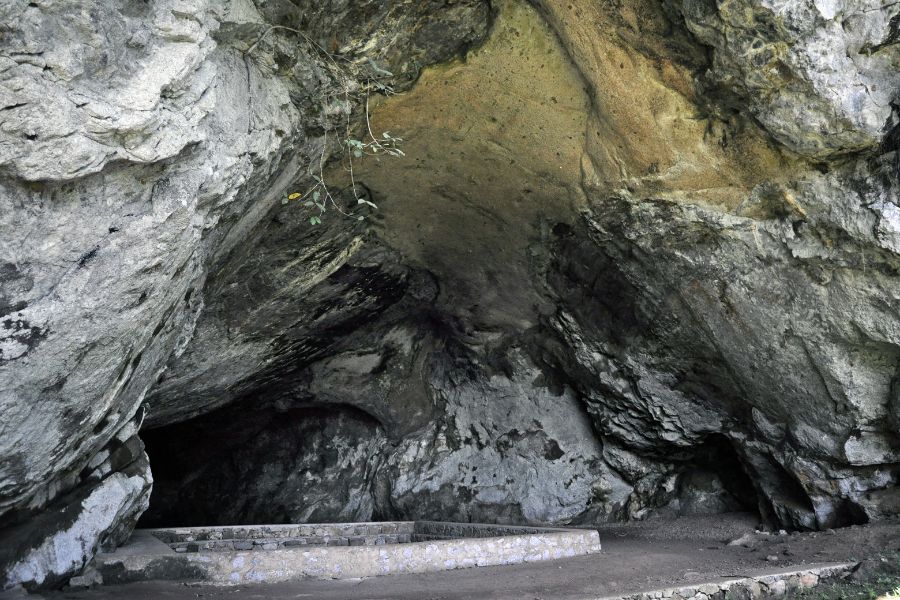
Perched dramatically on the forested slopes of the Sri Pada mountain range near Kuruwita in the Ratnapura District, Batadombalena Cave is one of South Asia's most momentous palaeoanthropological and archaeological sanctuaries. Hidden within a lush belt of wet-zone evergreen rainforest, this expansive natural rock shelter gained worldwide scientific acclaim through systematic excavations led by eminent archaeologist Dr. S.U. Deraniyagala. The subterranean layers revealed fossilized skeletal remains of anatomically modern humans—designated as 'Balangoda Man' (Homo sapiens balangodensis)—with cultural deposits securely radiocarbon-dated to between 13,000 and 36,000 years before present.
Excavations at Batadombalena provided groundbreaking archaeological milestones, uncovering some of the world's earliest evidence of advanced geometric microlithic stone tool technology, crafted with precision from quartz and chert over 30,000 years ago. Alongside lithic bladelets, researchers unearthed charred plant remains, wild breadfruit and banana seeds, bone arrowheads, and marine snail beads, indicating sophisticated hunter-gatherer foraging strategies and prehistoric trade networks connecting the rainforest highlands to coastal lagoons.
Reaching Batadombalena is an evocative eco-adventure for history enthusiasts and hikers alike. The trail ascends from the rubber and tea estates of Kuruwita into deep jungle, winding past boulder-strewn streams, wild bamboo thickets, and a rustic flight of concrete and stone stairways leading to the massive rock overhang. Standing inside the breezy, vaulted cavern looking out over the misty rainforest canopy, visitors encounter a rare, humbling threshold where modern humankind's earliest South Asian ancestors once thrived.
What to expect
Highlights
- Explore the hallowed prehistoric cave site that yielded skeletal remains of Balangoda Man dating back over 36,000 years.
- Learn about pioneering archaeological discoveries, including some of the world's oldest geometric microlithic tools.
- Hike through a scenic rainforest trail winding past rubber plantations, endemic flora, and rushing mountain streams.
- Inspect the preserved stratigraphic excavation pits maintained under the custody of the Department of Archaeology.
- Enjoy cool mountain breezes and sweeping jungle vistas looking out from the elevated rock cavern threshold.
- Combine your trek with nearby Sabaragamuwa eco-attractions, including Bopath Ella and the Kuruwita pilgrimage trails.
Traveler reviews
Ratings and experiences from visitors
No traveler reviews written yet for Batadombalena Cave.
Traveler photos
Photos of this destination
Questions & answers
What is the dress code and footwear recommendation?
Comfortable, breathable sportswear or hiking clothing suitable for humid tropical trekking is ideal. Sturdy shoes with reliable traction are essential for ascending wet dirt paths and slippery steps, and leech protection is strongly recommended.
What is the entry ticket fee for foreigners and locals?
Access to Batadombalena Cave is completely free of charge for both international travelers and Sri Lankan citizens, as it is a protected public archaeological landmark.
How physically demanding is the hike to Batadombalena?
The hike is rated moderate. From the road head, it takes approximately 30 to 45 minutes of uphill walking involving uneven jungle trails and over 300 steps, requiring an average level of physical fitness.
Are cameras and photography permitted?
Yes, photography and videography are warmly permitted across the jungle trail, the cave exterior, and the cavern interior. Visitors should exercise caution and avoid disturbing any protected excavation areas.
How long does a typical visit take?
A typical visit lasts between 2 to 3 hours, allowing adequate time for the uphill hike, exploring the cave shelter, reading archaeological interpretive signage, and descending back to the trailhead.


