Belilena Cave
 Ancient Sites

About Belilena Cave
A globally renowned prehistoric cave shelter near Kitulgala holding skeletal remains of Balangoda Man dating back over 16,000 to 30,000 years.
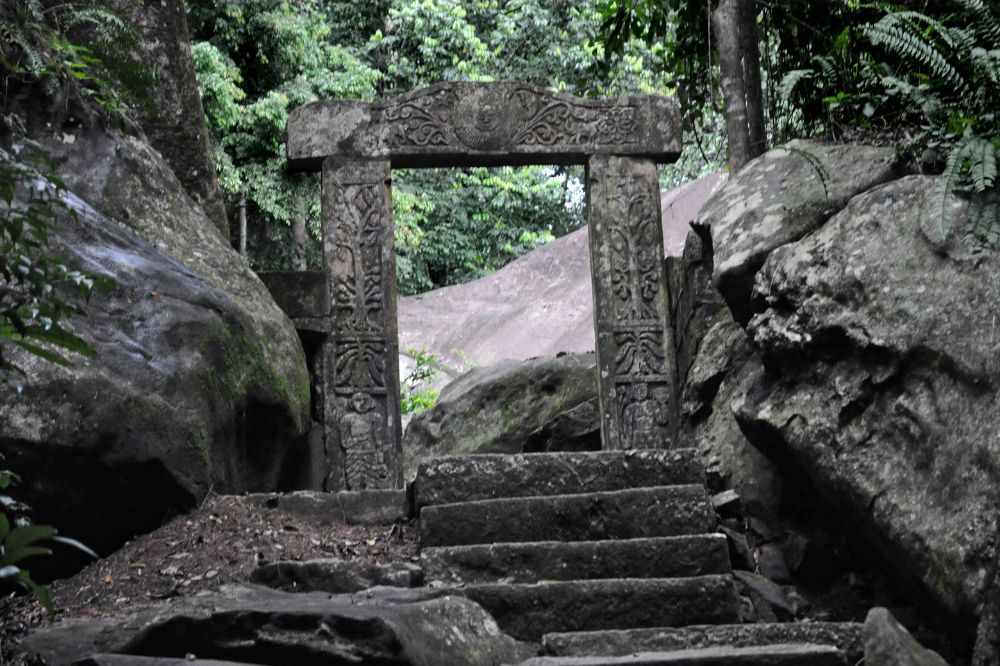
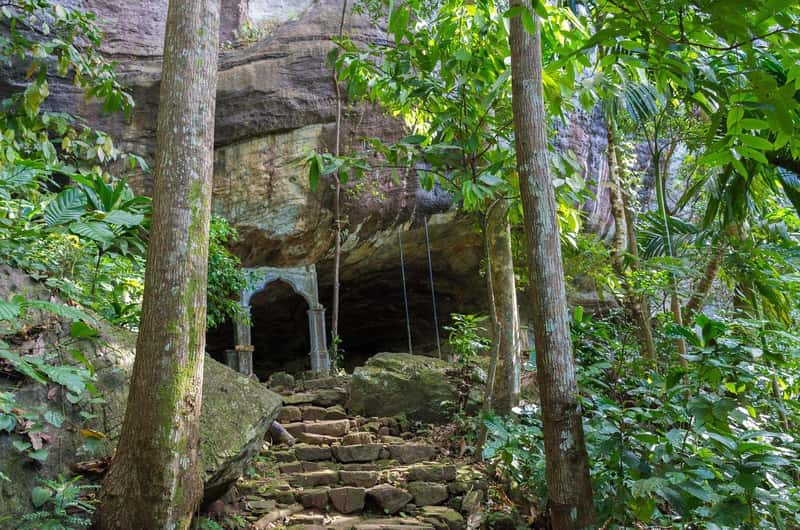
Perched at an elevation of roughly 600 meters upon a steep, forested rock escarpment near Kitulgala in the Kegalle District, Belilena Cave (Kitulgala Beli Lena) is one of South Asia's most significant palaeoanthropological and prehistoric archaeological landmarks. Hidden amidst lush rainforest tracts and rubber plantations within the Inoya estate, the colossal rock shelter opens dramatically beneath a sheer granite precipice draped with hanging creepers and a gentle seasonal cascade dripping past its mouth. Systematically excavated between 1978 and 1983 by the Department of Archaeology under the visionary guidance of Dr. S.U. Deraniyagala, the cave's subterranean strata yielded skeletal remains of anatomically modern humans—the famed 'Balangoda Man' (Homo sapiens balangodensis)—dated between 16,000 and 32,000 years before present.
The archaeological finds uncovered at Belilena fundamentally enriched global scientific understanding of early human migration and technology. Excavations revealed extensive assemblages of finely crafted geometric microlithic stone tools made from quartz and chert, making Sri Lanka one of the earliest documented centers of micro-blade stone technology outside of Africa. In addition to stone implements, archaeologists unearthed polished bone darts, charred epicarps of wild bananas and breadfruit, edible freshwater snail shells (Acavus), and marine shells, the latter proving the existence of prehistoric trade networks or seasonal hunting journeys linking inland rainforest caves with coastal waters over 80 kilometers away.
A trek to Belilena Cave offers an evocative combination of active eco-adventure and ancient discovery. Travelers navigate narrow country estate tracks through rubber and kitul palm groves before tackling a scenic uphill stone staircase leading directly into the cavern's massive amphitheater. Standing inside the cool, breezy rock shelter looking out over the emerald canopy of the Kelani River valley, visitors can inspect the preserved archaeological trenches and a modest modern shrine, feeling a profound connection to the hunter-gatherers who sought shelter beneath these very rocks during the Ice Age.
What to expect
Highlights
- Explore the massive prehistoric rock cavern that yielded skeletal fossils of Balangoda Man dating back over 16,000 to 30,000 years.
- Examine the archaeological layers where pioneering geometric microlithic quartz tools and polished bone implements were discovered.
- Hike through scenic hillside trails winding past tea, rubber, and kitul palm plantations with views of the Kelani River valley.
- Admire the natural waterfall that trickles gracefully over the lip of the sheer granite cliff directly across the cave entrance.
- Inspect the preserved stratigraphic trenches maintained under the stewardship of the Department of Archaeology.
- Spot endemic rainforest birds, jungle butterflies, and wild orchids flourishing in the dense surrounding canopy.
Traveler reviews
Ratings and experiences from visitors
No traveler reviews written yet for Belilena Cave.
Traveler photos
Photos of this destination
Questions & answers
What is the dress code and footwear recommendation?
Comfortable, lightweight activewear or trekking clothing suited for humid rainforest terrain is recommended. Sturdy trail shoes or hiking sandals with reliable grip are essential for the uneven stone stairway, and leech protection is strongly advised.
What is the entry ticket fee for foreigners and locals?
Admission to Belilena Cave is completely free of charge for both international travelers and Sri Lankan citizens, as it is an open national archaeological reserve.
How physically demanding is the hike to Belilena Cave?
The hike is rated moderate. From the vehicle parking point on the Inoya estate track, visitors walk roughly 1 kilometer uphill, including ascending over 200 stone steps, which takes about 20 to 35 minutes at a steady pace.
How long does a typical visit take?
A typical visit lasts between 1.5 to 2.5 hours, providing ample time for the hike up, exploring the cavern and excavation areas, taking photos, and walking back down to the trailhead.
Are cameras and photography permitted?
Yes, photography and videography are warmly welcomed throughout the trail, the cave threshold, and surrounding forest. Visitors should avoid disturbing protected excavation trenches or using high-intensity illumination on sensitive rock surfaces.