Seetha Amman Temple
 Religious Places

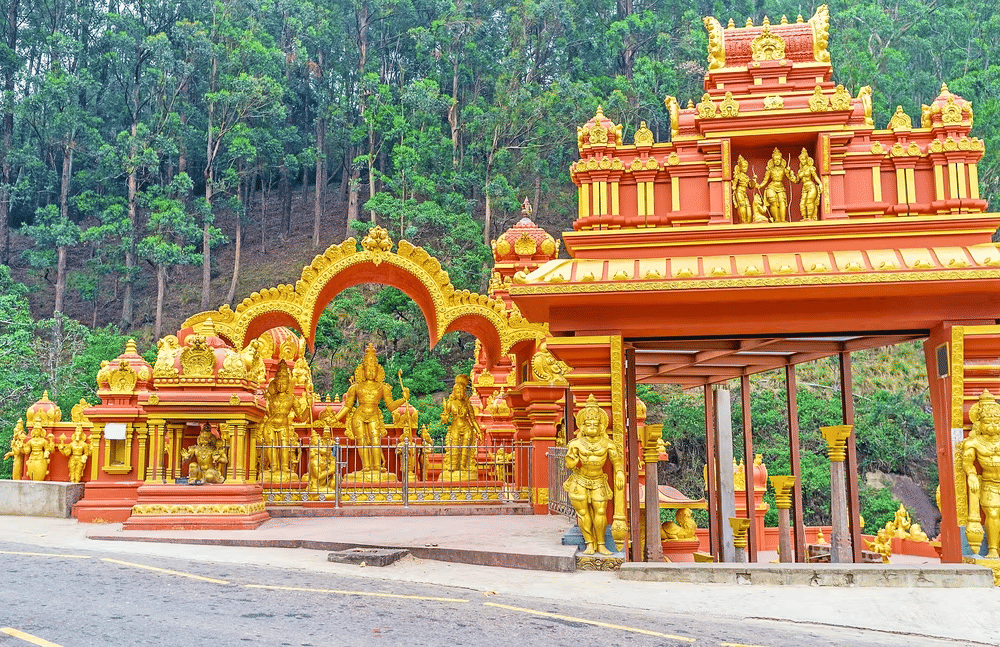
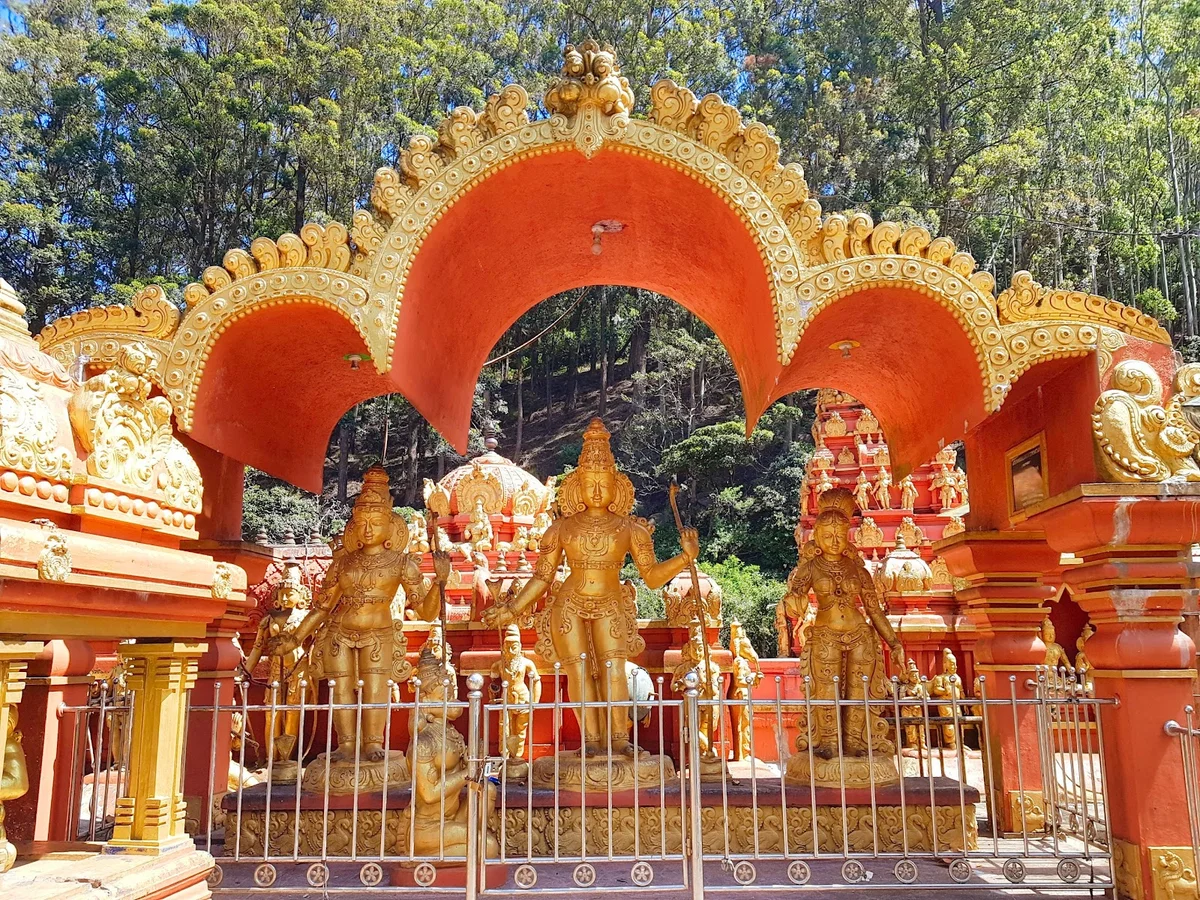
About Seetha Amman Temple
The world's only temple dedicated to Goddess Sita, marking the sacred Ramayana site where she was sheltered in Ashok Vatika.
Perched beside a bubbling mountain stream in the misty highland village of Seetha Eliya, the Seetha Amman Temple (Sri Seetha Amman Kovil) is widely venerated as the only Hindu temple in the world dedicated specifically to Goddess Sita. Situated roughly 5 kilometers southeast of Nuwara Eliya at an altitude exceeding 1,750 meters, the shrine occupies a legendary setting identified in the ancient epic Ramayana as part of Ashok Vatika. According to millennia-old mythological tradition, this verdant forest grove was where the demon King Ravana kept Princess Sita captive after abducting her from India, sheltering her under majestic Ashoka trees while she prayed steadfastly for Lord Rama to rescue her.
Architecturally, the modern shrine is an exquisite jewel of traditional Dravidian design, crowned with a vibrant multi-tiered gopuram (tower) adorned with meticulously painted sculptures of Hindu deities, celestial nymphs, and epic battle episodes from the Ramayana. The inner sanctum houses centuries-old stone idols of Lord Rama, Sita Devi, Lakshmana, and Lord Hanuman, which were unearthed nearby over a century ago by local plantation workers. Directly behind the temple runs the rocky bed of the mountain stream where Sita is believed to have bathed, flanked by giant circular depressions in the riverbed rock revered by devotees as the indelible footprints left behind by Lord Hanuman when he leaped across Lanka to deliver Rama's divine ring.
Visiting Seetha Amman Temple provides a serene and evocative spiritual experience that contrasts wonderfully with the surrounding colonial heritage of Little England. The temple is immersed in the crisp mountain air and shaded by moss-draped pines, with the scent of burning camphor, crushed marigolds, and sandalwood incense filling the air. As temple bells chime and Hindu priests conduct ancient morning arati rituals against the backdrop of rushing river waters and the looming Hakgala mountain ridge, travelers and pilgrims are treated to a profound encounter with living mythology along Sri Lanka's renowned Ramayana trail.
What to expect
Highlights
- The world's only standalone Hindu temple dedicated to Goddess Sita, anchoring Sri Lanka's sacred Ramayana Trail
- Ancient stone idols of Rama, Sita, Lakshmana, and Hanuman enshrined within the atmospheric inner garbhagriha
- The legendary giant footprints embedded in the granite riverbed, revered as the landing marks of Lord Hanuman
- Vibrant Dravidian-style gopuram and shrine spires featuring intricately sculpted, hand-painted mythological figures
- The natural mountain stream where Sita is believed to have bathed and prayed during her captivity in Ashok Vatika
- Picturesque highland backdrop framed by misty pine forests and the dramatic nearby escarpment of Hakgala Peak
Traveler reviews
Ratings and experiences from visitors
No traveler reviews written yet for Seetha Amman Temple.
Traveler photos
Photos of this destination
Questions & answers
What is the dress code or entrance etiquette?
Visitors must dress modestly with both shoulders and knees completely covered, avoiding revealing cutouts, shorts, or sleeveless garments. Footwear and hats must be removed at the shoe stall outside before entering the sacred perimeter.
What is the entry ticket fee for foreigners and locals?
Entrance to the temple grounds is completely free for all foreign and local visitors. Travelers who wish to participate in special blessings, light ghee lamps, or present fruit trays can purchase puja tickets and archana offerings for approximately LKR 200 to 500.
How long does a typical visit take?
A typical visit lasts between 30 to 45 minutes, allowing ample time to observe the shrine hall, seek blessings during an ongoing puja ritual, and walk down to the riverbed behind the temple to view the Hanuman footprint rocks.
Are cameras and photography permitted?
Photography is freely permitted outside around the painted temple towers, stream, and riverbed rocks. However, photography and video recording are strictly prohibited inside the inner sanctum where the primary deities reside.
What are the temple opening hours and puja times?
The temple is open daily in two sessions: from 8:00 AM to 1:00 PM in the morning, and from 2:00 PM to 6:30 PM in the afternoon, with primary devotional puja ceremonies held around 8:30 AM and 5:00 PM.


