Maha Saman Devalaya
 Religious Places

About Maha Saman Devalaya
An ancient 13th-century sanctuary in Ratnapura dedicated to Deity Saman, guardian of Sri Pada and the gem-rich Sabaragamuwa realm.
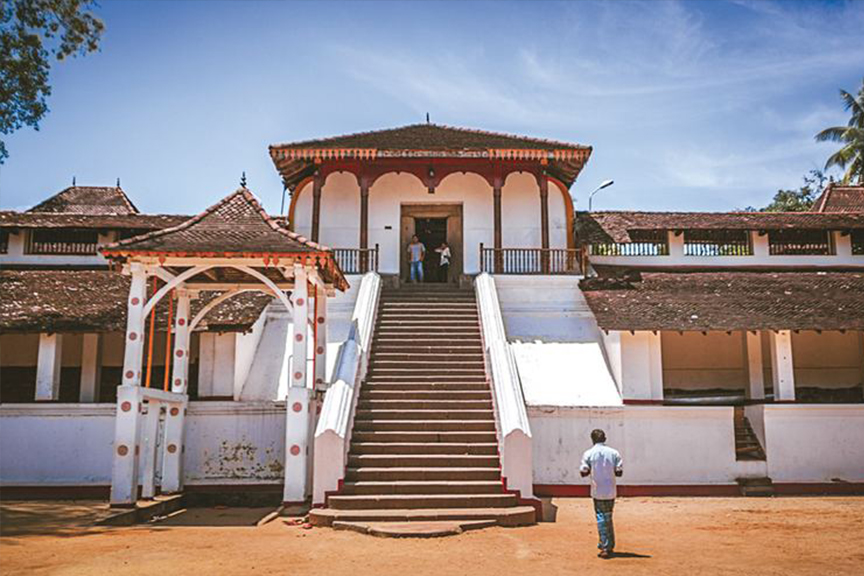
Rising gracefully on a verdant hillock beside the meandering Kalu Ganga in Ratnapura, the Sabaragamuwa Maha Saman Devalaya is one of the most venerable, culturally resonant, and historically significant spiritual citadels in Sri Lanka. Dedicated to Sumana Saman Deviyo—one of the four traditional guardian deities of the island (Satara Waram Deviyo) and the celestial protector of the sacred peak Sri Pada (Adam's Peak)—the shrine's spiritual roots reach back to the dawn of recorded island chronicles. According to Buddhist tradition, Saman was a righteous regional ruler who welcomed the Buddha during his visit to Mahiyangana, attained the stage of Sotapanna, and was subsequently venerated as a benevolent deity safeguarding righteousness, rain, and the precious gem troves of Sabaragamuwa.
The historical sanctuary on this site dates to the 13th-century Dambadeniya Kingdom, when royal minister Aryakamadeva vowed to construct a grand shrine in honor of God Saman if his royal gem-mining expeditions proved prosperous. Following an unprecedented bounty of sapphires and rubies, the minister fulfilled his pledge under the patronage of King Parakramabahu II in 1270 CE. The complex underwent dramatic trials over the centuries: during the 16th-century Portuguese incursions, the ancient shrine was razed and replaced with a fortified Catholic church and garrison. However, King Rajasinha II of the Sitawaka and Kandyan dynasties recaptured the stronghold in the 17th century, demolished the garrison, and meticulously rebuilt the Devalaya in the distinctive Kandyan multi-tiered timber and clay architectural tradition seen today.
Stepping across the grand stone gateway (Wahalkada) into the sprawling outer courtyards, visitors encounter an extraordinary fusion of Theravada Buddhist monasticism and indigenous deity veneration. Shaded by ancient bo trees and flanked by whitewashed perimeter ramparts, the complex features a serene Buddhist stupa, the main multi-storey Saman sanctum, and auxiliary shrines dedicated to Pattini, Kataragama, and Vishnu. In August or September, the temple hosts the legendary Sabaragamuwa Saman Devalaya Esala Perahera, a vibrant multi-day cultural pageant featuring decorated tuskers, traditional Sabaragamuwa dancers, whip crackers, and the sacred water-cutting ceremony (Diya Kapeema), making it a pinnacle of living Sri Lankan heritage.
What to expect
Highlights
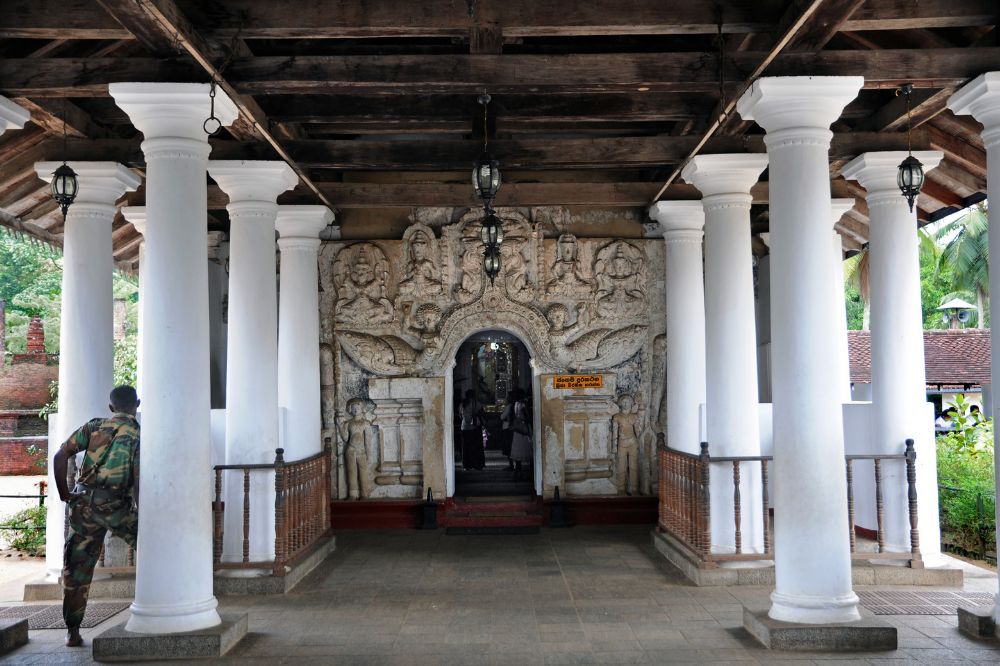
- Marvel at the classical Kandyan-era timber architecture, tiered clay roofs, and stone colonnades of the 13th-century main sanctum.
- Pay homage at the central shrine of Deity Saman, the celestial guardian of Sri Pada and protector of the gem valleys.
- Enter through the imposing historic Wahalkada (monumental gateway) and inspect centuries-old carved stone guardstones.
- Experience the vibrant daily theva (puja) ceremonies accompanied by sacred Sabaragamuwa drumming and traditional conch-shell blowing.
- Witness the world-renowned Sabaragamuwa Maha Saman Devalaya Esala Perahera held annually in August or September.
- Stroll around the peaceful outer temple maluwa shaded by ancient Bo trees overlooking the scenic banks of the Kalu Ganga.
Traveler reviews
Ratings and experiences from visitors
No traveler reviews written yet for Maha Saman Devalaya.
Traveler photos
Photos of this destination
Questions & answers
What is the dress code or entrance etiquette?
Modest clothing covering shoulders, chest, and knees is strictly required, with white or light-colored garments strongly encouraged. All footwear, hats, and sunglasses must be removed before stepping onto the sacred inner terrace and shrine enclosures.
What is the entry ticket fee for foreigners and locals?
Admission to Maha Saman Devalaya is completely free for both international visitors and local pilgrims, though voluntary donations placed into temple donation tills to support community services and upkeep are warmly appreciated.
When is the annual Saman Devalaya Esala Perahera held?
The grand Esala Perahera takes place annually during the months of August or September. It spans 13 days of colorful nighttime processions featuring dozens of caparisoned elephants and traditional regional dancers, concluding with the sacred Diya Kapeema water-cutting ritual.
How long does a typical visit take?
A typical visit lasts between 1 to 2 hours, which provides ample time to walk through the outer courtyards, observe an active puja ceremony, admire the architecture, and visit the Buddhist stupa.
Are cameras and photography permitted?
Yes, photography and videography are warmly permitted across the outer courtyards, stone stairways, and temple grounds. However, photography is strictly prohibited inside the inner Devalaya sanctum where deity rituals take place.